How Window Film Lowered Surface Temperatures at Rattler Stadium
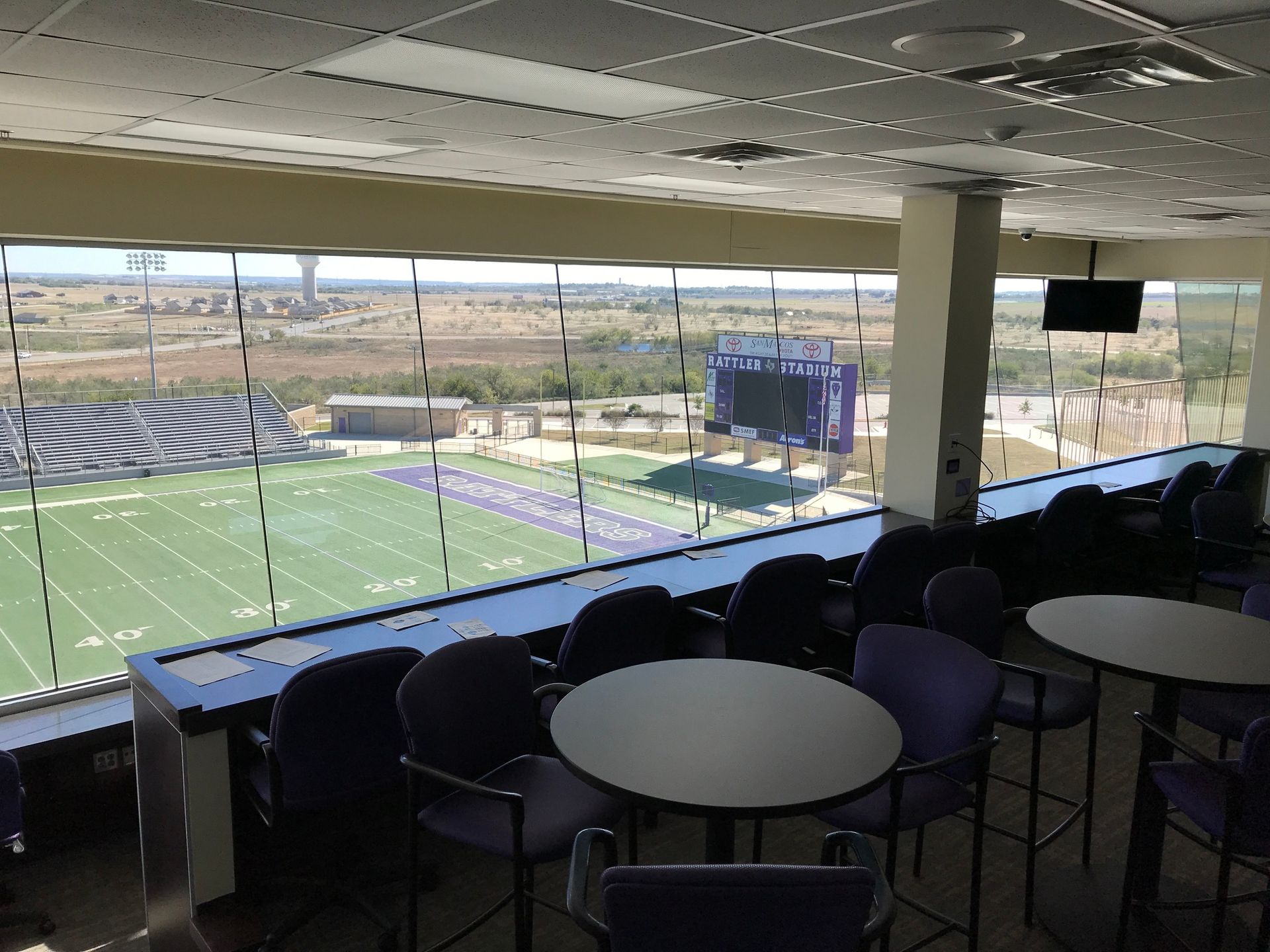
The windows at San Marcos High School's Rattler Stadium were doing more than giving spectators and game officials a view of the field. During the day, they were also allowing a tremendous amount of sunlight and heat into the press and viewing areas, making the rooms uncomfortable, increasing the workload on the HVAC system, and damaging materials inside. Countertops and other surfaces were exposed to extremely high temperatures, while the adhesive used on some laminate finishes was beginning to fail.
The stadium needed a way to control the heat without sacrificing the clear view that made the space useful in the first place. Here's how we were able to help.
The Glass Was Turning Sunlight Into a Heat Problem
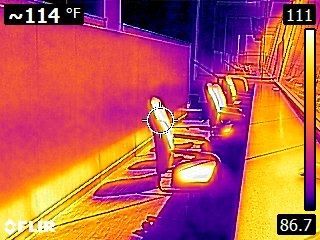
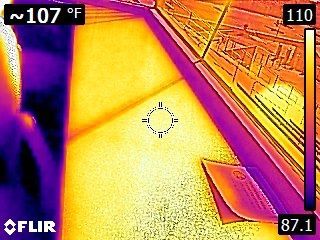
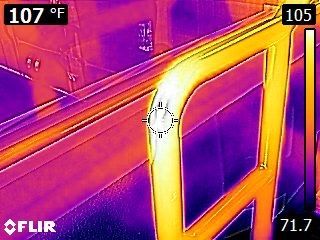
Large windows can create a substantial amount of solar heat gain, particularly when direct sunlight reaches interior surfaces for hours at a time. At Rattler Stadium, the thick glass appeared to intensify the effect. During the initial site survey, the back of a chair near the windows registered 114°F. A countertop in an untreated press box reached 107°F.

Those readings were taken in November. Central Texas was not yet experiencing its most intense summer temperatures, but the rooms were already becoming hot enough to affect comfort, materials, and equipment. During warmer months, the problem was likely to become even more pronounced.
The stadium’s neighboring press boxes made the conditions especially easy to document. Because the rooms sit directly beside one another and receive similar sun exposure, one could be treated while the other remained unchanged. That created a useful side-by-side comparison between filmed and unfilmed glass.
The View Could Not Be an Afterthought
Blocking the windows or installing an extremely dark film might have reduced some of the incoming heat, but it would also have interfered with the primary purpose of the rooms.

Game officials and spectators still needed a clear view of the field. Since most games are played at night, visibility through the glass was particularly important. The film could not create a dark, reflective surface that made it difficult to see outside once the stadium lights came on.
Sal’s House of Tint selected Panorama Slate 40 window film for the project. The film was chosen to significantly reduce solar heat gain and glare while maintaining the visibility required during games.
The Temperature Difference Was Easy to Measure
After the film was installed, thermal imaging allowed the treated and untreated press boxes to be compared under similar conditions.
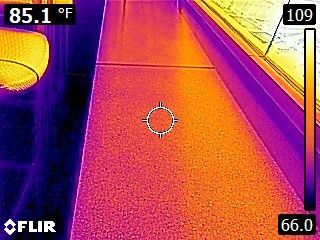
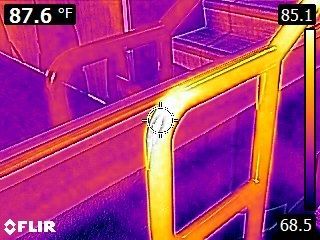
The countertop behind the untreated glass measured 107°F. In the neighboring press box with Panorama Slate 40 installed, the comparable surface measured 85°F, a difference of 22 degrees.


The handrails showed a similar result. The untreated handrail reached 107°F, while the one in the filmed area measured 87°F.


These readings really show why solar heat is more than simply how warm the air feels. Sunlight passing through glass can heat individual surfaces to temperatures way above the room’s thermostat setting. Those surfaces then release heat back into the space, making the HVAC system work harder to maintain any kind of comfort.
High surface temperatures can also shorten the life of finishes, adhesives, furnishings, and other materials that are near the windows.
A More Comfortable Space Without Losing the Field
The finished installation reduced the amount of solar energy entering the press boxes while preserving their connection to the field. Officials and spectators can continue to see the action clearly, but the rooms no longer absorb the same level of heat through the glass.
For Rattler Stadium, window film offered a practical middle ground. It addressed the source of the heat without covering the windows, replacing the glass, or compromising nighttime visibility. The side-by-side thermal images make the result particularly clear. In two nearly identical spaces exposed to the same November sun, the treated room remained noticeably cooler.
And when surfaces are already exceeding 100°F before summer arrives, a difference of 20 degrees or more is not difficult to feel.